
How to use AI for better A/B tests
The most effective A/B testing programs combine AI-driven efficiency with structured experimentation and human expertise to deliver faster insights, smarter decisions, and stronger business results.






Updated August 19, 2026

AI is changing how businesses approach A/B testing. At the same time, it has created several misconceptions. Some believe AI can run an entire experimentation program on its own. Others see it as nothing more than a tool for generating copy or design ideas.
The reality sits somewhere in between. AI is most valuable when it supports experienced experimentation teams. It speeds up research, ideation, implementation, and analysis. Strategic decisions, however, still require human expertise. In this article, we'll look at where AI adds value throughout the experimentation process, what it can't replace, and the best practices for using AI responsibly to achieve better business outcomes.
Key takeaways
- AI speeds up research, ideation, and analysis, but human strategy and judgment remain essential.
- Data-driven insights reduce guesswork, accelerate test launches, and simplify result analysis.
- Strong foundations require centralized analytics, structural context, and historical test data.
- Human specialists must validate AI recommendations, prioritize hypotheses, and verify statistics.
- Ethical safeguards must protect user privacy, prevent bias, and avoid manipulative dark patterns.
Where AI fits in the experimentation process
AI can support almost every stage of an A/B testing workflow, but its role changes depending on the task. It helps speed up research, ideation, design, implementation, and analysis, but CRO specialists still review its recommendations and make the final call.
- Research & analysis: AI can analyze website data, user behavior and existing experiment results to identify patterns, friction points and potential areas for improvement.
- Ideation & hypothesis generation: AI can turn those insights into potential test ideas and hypotheses. Teams can then prioritize the strongest ideas based on factors such as potential impact, confidence, and effort.
- Design & variation creation: AI can help create different versions of a page, including changes to layouts, messaging, CTAs and other elements based on the chosen hypothesis.
- Test setup & implementation: AI-powered testing software can help teams build and launch experiments, reducing the manual work involved in implementing variations and setting up tests.
- Monitoring & analysis: During the experiment, AI can help monitor performance, identify patterns, and surface important changes in the data. Statistical validation is still required to determine whether the results are reliable.
- Decision-making & rollout: AI can highlight winning variations and provide insights from the results, but teams still need to review the findings and decide whether a change should be rolled out based on business goals, user needs and the quality of the evidence.
» Find the best A/B testing tools for your experimentation program
4 business benefits of AI-assisted A/B testing
AI doesn't just help teams run more experiments. It helps them run better ones. By speeding up research, test creation, and analysis, AI allows businesses to optimize their websites more efficiently and focus on changes that are more likely to improve conversions.
1. Higher chance of running successful tests
Instead of relying on guesswork, AI analyzes user behavior, website analytics, and previous experiments to identify the changes most likely to improve conversions. This helps teams focus on high-impact opportunities rather than spending time testing ideas with little potential.
2. Faster test creation
Creating A/B tests often involves designing new layouts, writing code, and building page elements. AI speeds up much of this process by generating variations, assisting with development, and automating repetitive tasks.
As a result, experiments can move from idea to launch much faster, allowing businesses to test and validate improvements in a fraction of the time.
3. Smarter insights and prioritization
AI can combine information from analytics platforms, heatmaps, session recordings, customer feedback, and competitor research to build a more complete picture of user behavior. Rather than manually reviewing each data source, teams receive prioritized recommendations based on where users experience friction and which opportunities are likely to have the greatest impact.
4. Easier analysis of test results
Once an experiment is complete, AI helps teams understand not only which variation performed better but also why. Instead of manually filtering reports or writing complex database queries, users can ask questions in natural language to explore audience segments, behavioral patterns, and other insights. This makes it easier to learn from every experiment and apply those findings to future optimization efforts.
» Ready to achieve these benefits for your business? See how CROforce uses AI-assisted experimentation
What organizations need before adopting AI experimentation
While any business can use AI to support experimentation, it performs best when it's built on a strong foundation. The quality of the insights AI provides depends on the quality of the data it has access to. Before introducing AI into your experimentation workflow, make sure you have:
- Centralized analytics data: A complete view of user behavior, including clicks, conversions, user journeys, and key performance metrics across your digital channels.
- Visual and structural context: Access to current page layouts, wireframes, screenshots, or design assets so AI can understand the experience it's helping to optimize.
- Competitive insights: Visibility into how competitors have evolved their websites, features, and customer experiences over time to uncover new testing opportunities.
- Historical experiment data: A well-organized record of previous A/B tests, including hypotheses, winning and losing variations, and the results behind each experiment. This helps AI learn from past successes and avoid repeating ineffective ideas.
Organizations lacking clean analytics or structured historical test documentation will find that AI models lack the baseline context necessary to generate reliable, high-impact recommendations.
» Need a stronger experimentation foundation? CROforce can help organize your data and insights for more effective AI-assisted experimentation
What AI doesn't change about A/B testing
AI has transformed how teams research, build, and analyze experiments, but it hasn't changed how A/B testing works. Every successful experiment still relies on a clear hypothesis, reliable data, proper statistical validation, and human decision-making.
A/B testing still follows the same process
AI makes experimentation faster, but the testing process itself remains the same. Every experiment still compares a control (Version A) with a variation (Version B) to determine whether a change produces a statistically significant improvement.
Without a clear hypothesis, enough traffic, accurate tracking, and reliable data, AI can't produce trustworthy results.
Human judgment still matters
AI can analyze large amounts of data, generate test ideas, and create design variations in seconds. However, it can't decide which experiments best support business goals, reflect customer needs, or stay true to a brand's identity.
AI works best with expert review
The best experimentation teams use AI to speed up the process, but they don't let it make every decision. Experts still review test ideas, approve designs, validate implementations, and interpret the results before deciding what to test next.
This combination of AI efficiency and human expertise leads to smarter experiments and more meaningful outcomes.
Statistical boundaries remain strict
AI can create copy, generate variations, and adjust traffic, but it can't fix bad math. Things like sample size, statistical power, and confidence intervals still determine whether a test is reliable. If there isn't enough traffic or the test doesn't run long enough, AI can't turn weak data into a trustworthy result. Teams still need to check for issues like Sample Ratio Mismatch (SRM) and make sure enough data has been collected before making a decision.
» Need inspiration for your next experiment? Explore 8 CRO recommendations with real-world examples.
How humans and AI work together during an experiment
An effective AI-assisted experimentation program combines AI efficiency with structured human oversight at every stage of the testing process.
Rather than allowing AI to make autonomous decisions, CRO specialists review and validate every recommendation before it influences the customer experience. A typical workflow looks like this:
Stage | AI role | Human role |
|---|---|---|
Research | Analyze analytics, heatmaps, session recordings, customer feedback, and previous experiments | Validate insights and identify commercially valuable opportunities |
Hypothesis | Generate potential test ideas and supporting rationale | Review and prioritize hypotheses based on business goals, customer psychology, and expected impact |
Design & build | Generate copy, layouts, wireframes, and implementation code | Review branding, usability, accessibility, and technical quality before launch |
Analysis | Summarize results, identify patterns, and suggest explanations | Verify statistical significance, interpret business impact, and decide whether to implement, iterate, or reject the test |
How CROforce applies this approach
At CROforce, AI helps speed up every stage of the experimentation process, from research and ideation to implementation and analysis. But technology is only part of the process. Every AI-generated recommendation is reviewed by our CRO specialists to ensure it aligns with business goals, customer behavior, and A/B testing best practices.
When results aren't clear-cut, we don't rely on AI alone. Our team reviews statistical significance, sample size, audience segmentation, and qualitative insights to understand what's really happening. This ensures every decision is backed by reliable evidence before an experiment is launched, refined, or ruled out.
» Want to run better A/B tests with AI? Talk to a CROforce expert
How CROforce optimized Nimble's homepage with AI
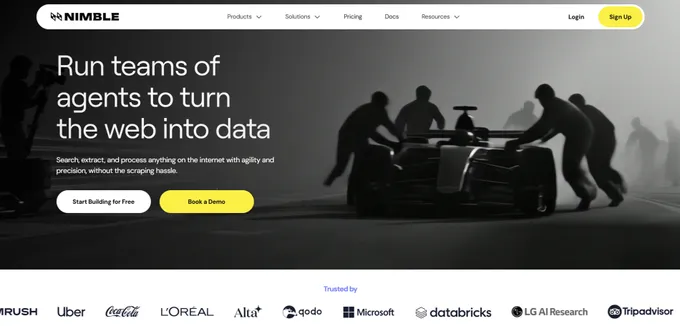
A good example of this approach is a homepage A/B test CROforce conducted for Nimble.
CROforce's AI-driven software supported the experiment from ideation through to analysis, while a CRO specialist remained involved at key decision points. The process combined AI-assisted test development with human review to make sure the hypothesis, implementation, tracking, and final result were properly validated.
- Ideation & hypothesis: CROforce's AI test suggestion tool analyzed website data and generated test ideas. A CRO specialist then selected the strongest hypothesis using the ICE framework (Impact, Confidence, Effort).
- Build: Once designed, the test was built and deployed using CROforce's A/B testing software.
- Monitoring: Traffic was split 50/50, with CROforce's software tracking performance against the agreed success metrics in real time. A CRO specialist checked in throughout the test to confirm everything was tracking correctly and running smoothly.
- Results: CROforce's software flagged the test once it reached statistical significance.
- Confirmation & rollout: The CRO specialist reviewed the winning variant and confirmed the result before deployment.
The winning variation delivered measurable business impact:
- 7.3% increase in revenue per visitor
Control:
Variant:
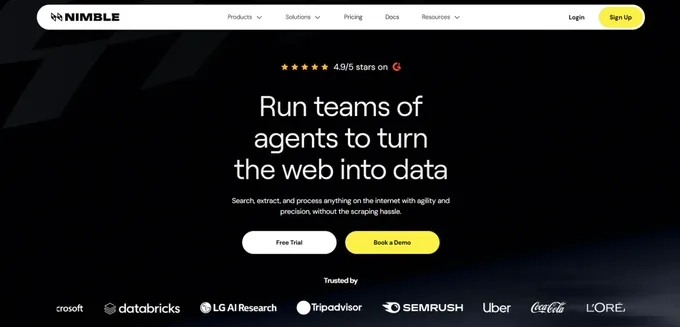
This case demonstrates that AI delivers the greatest value when paired with structured experimentation expertise. AI reduced the time spent on research, ideation, and execution, while CROforce specialists ensured every decision was supported by reliable data, customer insights, and statistical evidence.
The result was a faster experimentation process that produced a measurable increase in both conversions and revenue.
» Learn how to scale A/B testing with AI-powered conversion rate optimization
Ethical considerations for AI in experimentation
As AI becomes more integrated into experimentation, organizations need to ensure it is used responsibly. The biggest ethical considerations include:
- Customer privacy: Only collect and process data that users have agreed to share, while following applicable data protection and privacy regulations such as GDPR.
- Bias and discrimination: AI models should be reviewed regularly to ensure they do not unfairly favor or exclude specific customer groups.
- Manipulative experiences: Optimization should improve the user experience, not pressure or deceive users into making decisions through dark patterns.
- Automated decision-making: AI should support recommendations, but people should remain responsible for approving experiments and interpreting results.
» Make sure you know about the most common A/B testing mistakes
The future of AI in A/B testing
AI will continue to make A/B testing faster, smarter, and more accessible. As AI models become more advanced, they'll be able to uncover deeper customer insights, generate stronger hypotheses, and reduce the time needed to launch and analyze experiments.
However, successful experimentation won't become fully automated. Businesses will still need experienced teams to define strategy, validate AI recommendations, interpret results, and ensure every experiment aligns with customer needs and business objectives.
» Ready to accelerate your A/B testing with AI? Book a demo with CROforce
FAQs
What is AI in A/B testing?
AI A/B testing combines artificial intelligence with traditional A/B testing to improve research, hypothesis generation, experiment creation, and result analysis.
AI supports the experimentation process, while humans remain responsible for strategy, validation, and decision-making.
How does AI improve A/B testing?
AI helps experimentation teams analyze customer behavior, identify optimization opportunities, generate test ideas, assist with design and development, and summarize experiment results. This reduces manual effort and allows teams to run more experiments in less time.
What data does AI need for effective A/B testing?
AI performs best when it has access to accurate analytics, historical experiment results, customer behavior data, heatmaps, session recordings, and other structured datasets. Poor-quality data will reduce the quality of AI-generated recommendations.
Are there risks to using AI in experimentation?
Yes. Organizations should consider customer privacy, algorithmic bias, manipulative user experiences, and overreliance on automated recommendations. Human oversight and clear governance are essential to ensure AI is used responsibly.
Does AI replace CRO specialists?
No. AI enhances the work of CRO specialists by automating research and execution tasks, but it cannot replace strategic thinking, customer understanding, statistical interpretation, or business judgment. The best results come from combining AI efficiency with human expertise.