
Optimizely alternatives: 8 platforms for smarter experimentation
Optimizely can be a powerful experimentation platform, but its enterprise pricing and complexity are not the right fit for every team. This guide compares leading Optimizely alternatives by capabilities, pricing, and ideal use cases to help teams find a better-fit testing platform.




Updated October 16, 2026

Paying $36,000 or more a year for enterprise experimentation software only makes sense when your team gets enough value from it to justify the cost. For growth teams focused on testing velocity, an underused platform is difficult to defend, which is why more teams are considering Optimizely alternatives with the capabilities they need and less financial and operational overhead.
The cost is not the only concern. Enterprise platforms can involve multi-year commitments, complex implementations, and licensing structures that make experimentation harder to scale.
For growth leaders, product managers, and conversion rate optimization specialists, that can mean less time for launching and learning from experiments. This guide compares alternatives for teams that want practical testing, faster execution, and more flexibility without the same level of commitment.
A quick overview of the top 8 alternatives to Optimizely in 2026

CROforce combines A/B testing software with expert CRO services to improve conversion rates.
Dedicated CRO experts build, launch, and analyze experiments
Supports experiments across multiple websites and CMS platforms
Out-of-the-box pricing and shipping tests
Quick and easy setup

Kameleoon lets marketers connect browser behavior with backend experiments without building the integration themselves.
Client-side, server-side, and hybrid testing
Browser data for server-side targeting
HIPAA compliance and advanced statistics

Omniconvert is an e-commerce experimentation platform with A/B testing, targeting, personalization, and on-site survey capabilities.
A/B testing with multiple variants
40+ targeting criteria
Personalization and on-site surveys
Show more
» Ready to run more high-impact A/B tests? Explore CROforce’s CRO services for strategy, execution, and ongoing testing support
8 best Optimizely alternatives in 2026
1
CROforce
Fully managed service
Every aspect of the testing program is handled by CROforce's team, from strategy to development and analysis
Increased test velocity
Removes the resourcing bottleneck, enabling teams to ship significantly more tests than a DIY tool setup allows
Higher test impact
CROforce's experts identify the highest-leverage pages and elements on your site, so every test is built around the biggest possible uplift
Why we chose it
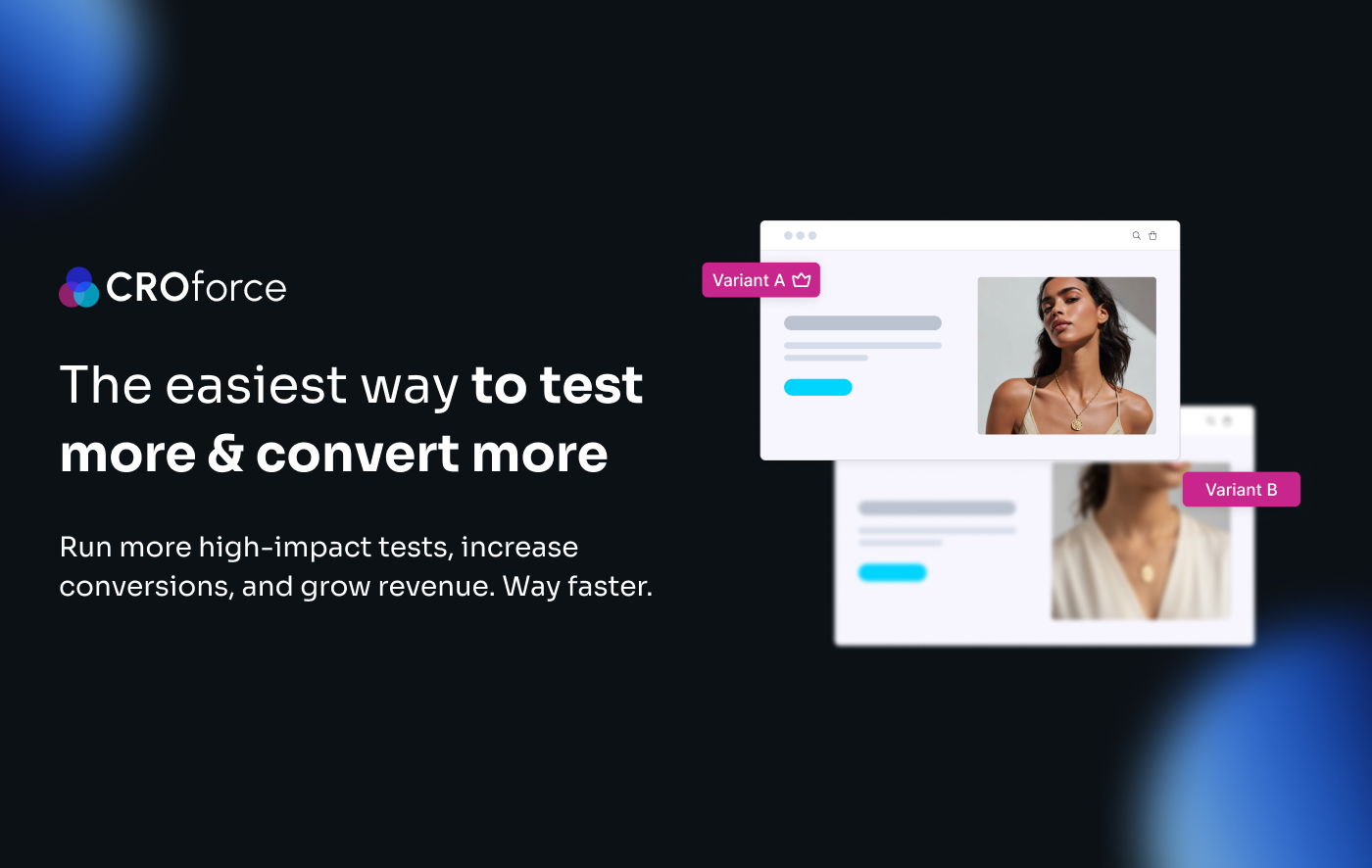
CROforce combines the testing platform with a managed CRO team, so teams get strategy, test design, development, QA, monitoring, and reporting in one service.
Unlike Optimizely, which provides the software but leaves execution and staffing to the customer or an agency, CROforce is designed for teams that want to increase testing velocity without building an in-house CRO function.
Core capabilities
- Pre-render testing designed to prevent page flicker
- A/A, split URL, multivariate, and price testing
- Managed testing with site audits, strategy, design, development, QA, monitoring, and reporting
- Monthly test allowances with design and development hours included
- No cap on concurrent tests
Pricing
Software-only plans start at $234/month. Managed plans range from $1,710 to $4,137/month when billed annually, with a 14-day trial and 30-day money-back guarantee.
Pros and cons
Expert CRO, development, and design support without hiring an in-house team
Run experiments across multiple websites and CMSs with less internal effort
Lower costs and faster time-to-launch than building an internal experimentation team
Less robust enterprise feature flagging capabilities
2

Kameleoon
Hybrid experimentation
Uses browser-collected data to target and analyze server-side experiments without a separate developer workflow
CUPED variance reduction
Reduces statistical variance to help experiments reach more reliable results with less noise
Regulated-industry support
Supports HIPAA compliance, making it suited to organizations with stricter data and privacy requirements
Why we chose it
Kameleoon brings client-side, server-side, and hybrid experimentation into one platform, making it a stronger fit than Optimizely for teams that need to connect web behavior with backend experiments.
Its hybrid capabilities can also let marketers use browser data to target server-side tests without building the connection themselves.
Core capabilities
- Hybrid experiments using browser data for server-side targeting
- CUPED variance reduction
- Sequential, Bayesian, and Frequentist statistical models
- HIPAA-compliant experimentation
- AI prompt-based experimentation for web tests
Pricing
Starter costs $495/month for 50,000 tracked users. Enterprise uses annual, sales-gated pricing based on monthly unique or tracked users.
Pros and cons
Combines client-side, server-side, and hybrid testing
Offers advanced statistical methods including CUPED
Supports HIPAA-compliant experimentation
Advanced capabilities require an Enterprise contract
AI prompt-based experimentation uses non-rollover monthly credits
3

Omniconvert
Free 50,000-user tier
Provides the full Explore feature set for up to 50,000 tested users with no time limit
E-commerce targeting
Supports more than 40 targeting criteria, including RFM segments and survey responses
Mutually exclusive experiments
Prevents overlapping experiments from affecting each other's results
Why we chose it
Omniconvert is an e-commerce-focused experimentation platform that brings A/B testing, personalization, targeting, and customer surveys into one tool. It supports more than 40 targeting criteria and offers its full Explore feature set free for up to 50,000 tested users.
Compared with Optimizely, Omniconvert is a more accessible option for e-commerce teams that want to start testing without an enterprise sales process or higher upfront costs.
Core capabilities
- Unlimited A/B testing with multiple variants, plus Bayesian and Frequentist statistics
- Mutually exclusive experiments to prevent test contamination
- More than 40 targeting criteria, including RFM segments and survey responses
- Code editor and Chrome extension visual editor
- Personalization and on-site surveys alongside experimentation
Pricing
Free for the first 50,000 tested users. Paid plans start at $350/month, with a 30% annual discount.
Pros and cons
Complete feature set available on the free tier
Supports unlimited A/B/n tests
Strong ecommerce targeting and segmentation
Experiments pause when the monthly user quota is exceeded
Ecommerce-focused segmentation may not suit SaaS or lead-generation teams
4

PostHog
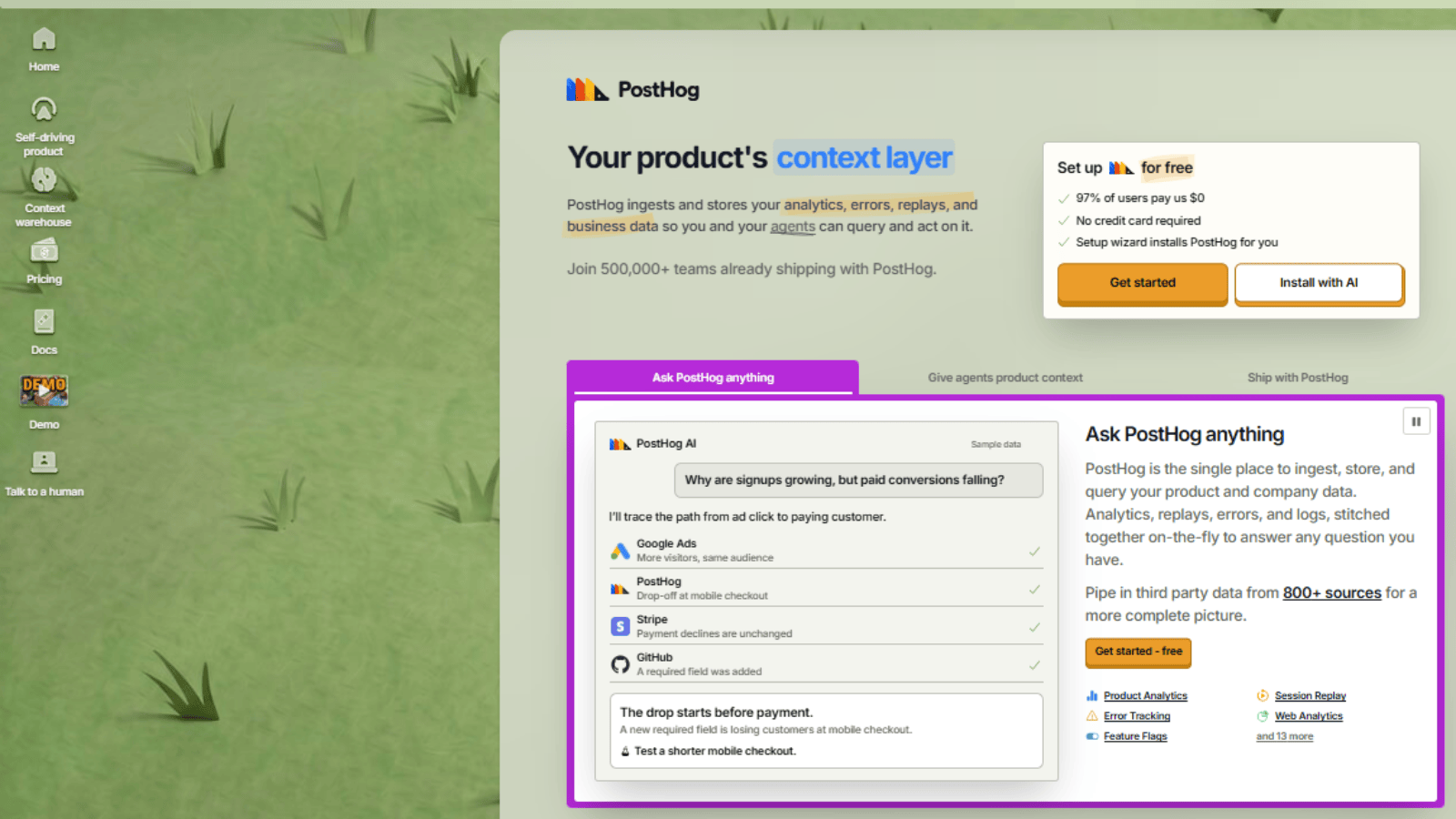
Feature-flag experimentation
Runs experiments through feature flags, connecting testing directly to product releases
Product analytics integration
Combines experiment results with session recordings, error tracking, and product analytics
Usage-based pricing
Charges based on requests rather than seats or a fixed annual experimentation contract
Why we chose it
PostHog brings experimentation, feature flags, product analytics, session replay, and error tracking into one platform. Its usage-based pricing and permanent free allowance make it a more accessible alternative to Optimizely for teams that want to start experimenting without an annual enterprise commitment.
Core capabilities
- Bayesian and Frequentist experiment analysis
- Sample-size and recommended runtime calculations
- Multi-variant feature flags with JSON payloads
- Experiment results alongside session recordings
- Feature flags connected directly to product releases
Pricing
Includes 1 million free requests per month, followed by usage-based pricing that decreases at higher request volumes. There are no seat charges.
Pros and cons
Combines experimentation with product analytics
Offers a permanent free usage allowance
Connects experiments directly to feature flags and session recordings
Complex web experiments still require engineering
5

LaunchDarkly
Feature-flag-first testing
Builds experimentation directly into the feature management and release workflow
30+ SDKs
Supports experimentation across a wide range of application environments through its SDK ecosystem
Guardrail metrics
an automatically roll back changes when performance falls outside defined thresholds on the Guardian tier
Why we chose it
LaunchDarkly combines experimentation with feature management, allowing engineering teams to test changes as part of their existing deployment workflow.
Its published usage-based pricing and free Developer tier also make it a more accessible starting point than Optimizely's quote-based Feature Experimentation product.
Core capabilities
- More than 30 SDKs with local evaluation
- A/B and multi-variant experiments
- Guardrail metrics and automated rollback on Guardian
- Experimentation for up to 100,000 monthly active users on Developer
- Feature management and experimentation in one platform
Pricing
Free Developer tier includes 5 service connections, 1,000 client-side MAUs, and 100,000 experimentation MAUs. Foundation starts at roughly $10 per service connection, plus $8.33–$10 per 1,000 client-side MAUs and $3 per 1,000 experimentation users. Enterprise pricing is custom.
Pros and cons
Connects experimentation directly to feature management
Offers experimentation within the free Developer tie
Supports a broad range of SDKs
Client-side MAU pricing can become expensive at high consumer traffic volumes
Free and Foundation plans have limited data retention
6

Intelligems
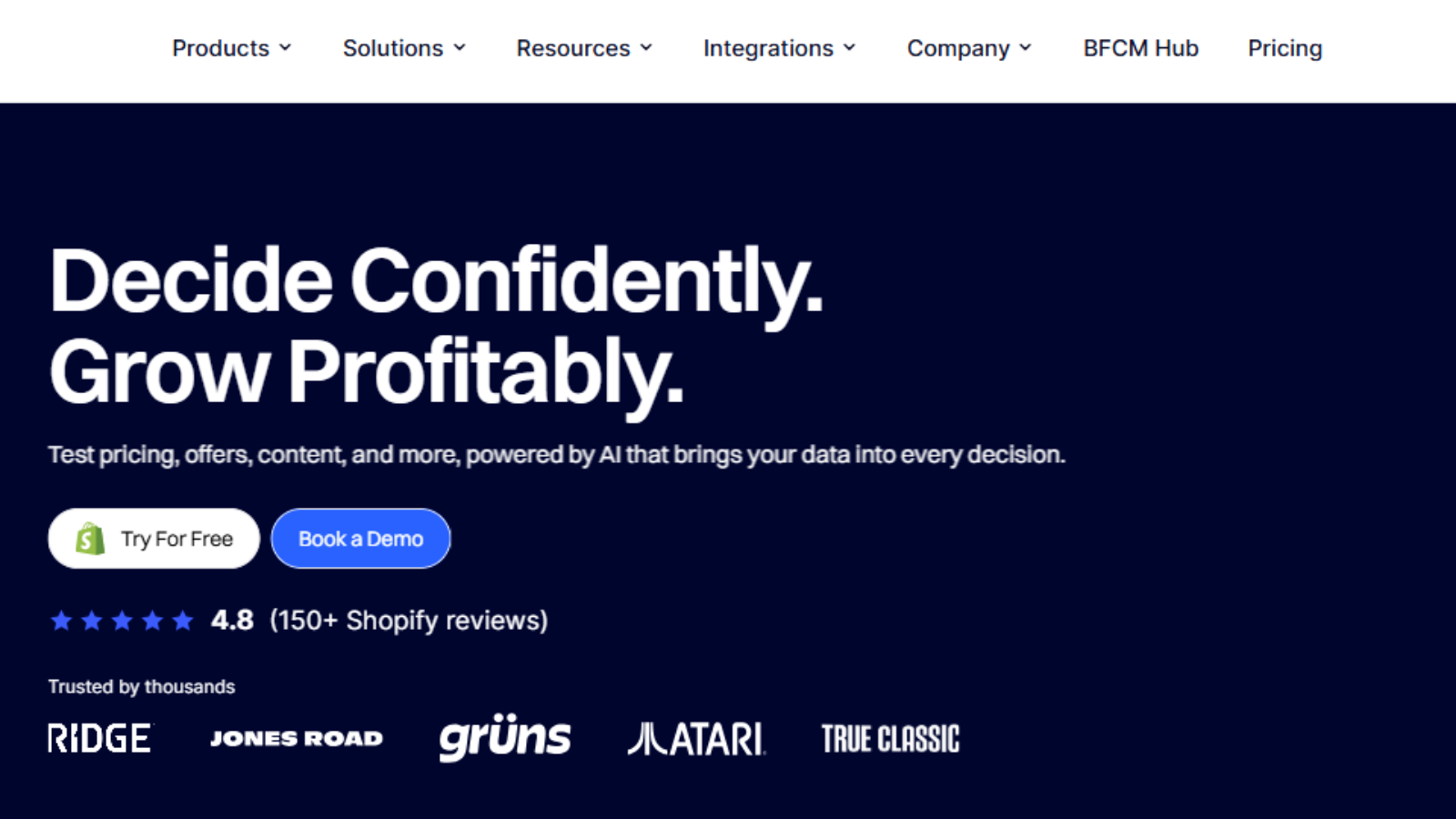
Profit-based testing
Measures variants against profit per visitor while accounting for discounts and returns
Shopify-native price testing
Tests live prices and shipping rates through Shopify Functions or checkout scripts
Winner rollout
Lets teams roll out winning variants to selected segments or channels after a test
Why we chose it
Intelligems is built specifically for Shopify and measures experiments against profit per visitor, including the impact of returns and discounts. For Shopify brands, that commerce-specific measurement and native pricing experimentation can provide a more relevant alternative to Optimizely's general-purpose experimentation approach.
Core capabilities
- Live price and shipping-rate testing through Shopify Functions or checkout scripts
- Up to five test groups per experiment
- Post-test rollout of winning variants to selected segments or channels
- Theme, landing page, and on-site content testing
- Profit-based measurement that accounts for returns and discounts
Pricing
Modular pricing is based on the funnel stages used. The Unlimited bundle costs $1,279/month billed annually or $2,894 month-to-month for stores with up to 10,000 orders per month.
Pros and cons
Built specifically for Shopify
Measures profit after returns and discounts
Supports live price and shipping tests
Price testing requires significant traffic to reach reliable results
No multivariate testing or server-side SDK for non-Shopify properties
7

Webflow
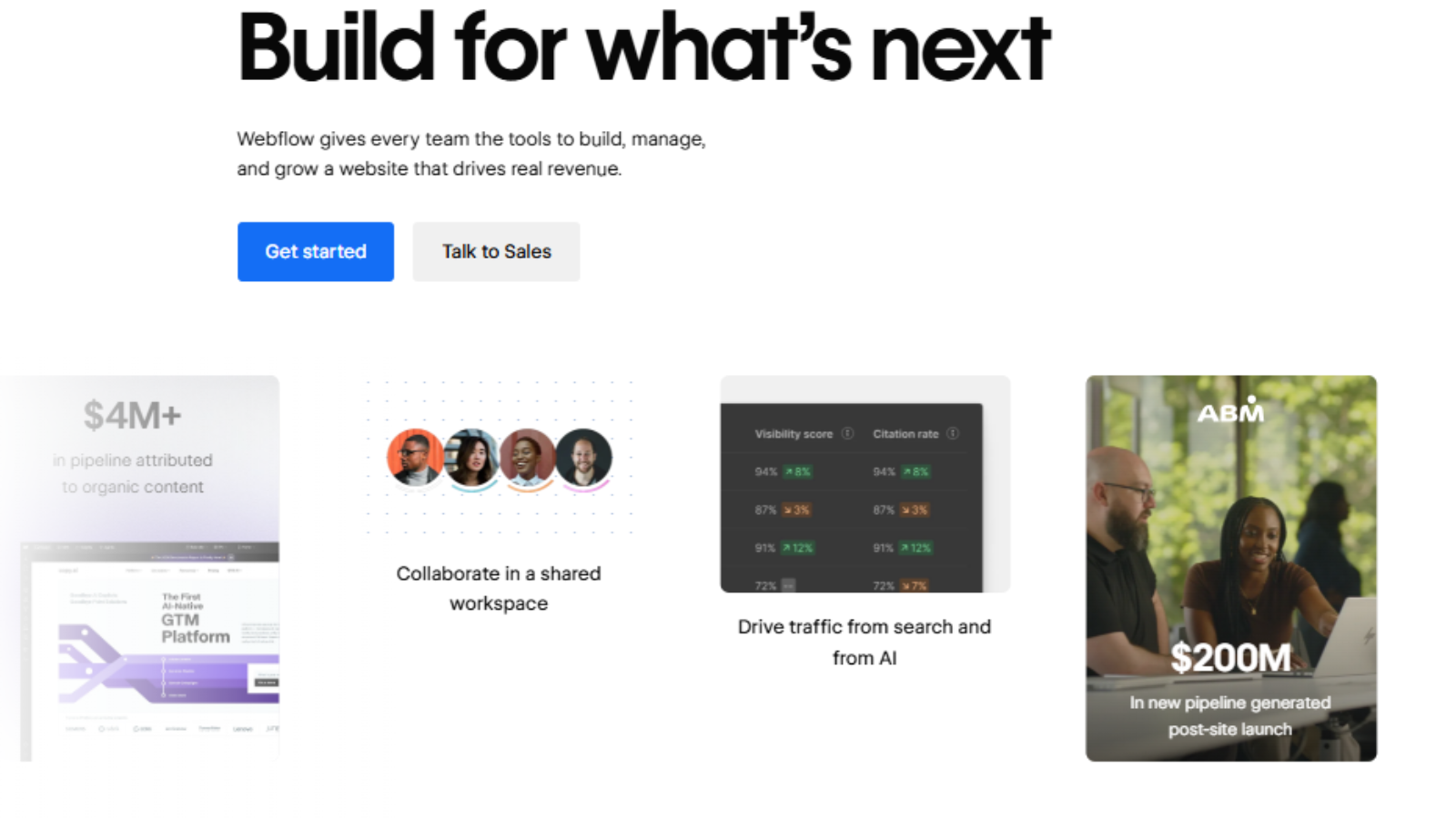
Native Webflow testing
Builds and runs A/B and multivariate tests directly inside Webflow Designer
AI personalization
Uses AI-driven personalization and audience targeting to tailor experiences
AI test suggestions
Generates experimentation ideas within the Webflow environment
Why we chose it
Webflow Optimize puts A/B testing and personalization directly inside Webflow, so teams can experiment within the CMS they already use instead of adding a separate experimentation platform and tag-injection workflow.
For Webflow teams, that can make testing simpler to launch and manage than using a standalone platform such as Optimizely.
Core capabilities
- A/B and multivariate testing inside Webflow Designer
- AI-driven personalization and audience targeting
- AI-generated test suggestions
- Native Webflow Analyze integration
- Testing and personalization within the existing Webflow workflow
Pricing
Starts at $379/month or $299/month billed annually for 25,000 page views, scaling with page views. A paid Webflow Site plan is also required.
Pros and cons
Eliminates a separate tag-injection workflow
Combines experimentation with AI personalization
Limited to Webflow-hosted pages.
Can be expensive for teams running only occasional experiments
8

Mida
15 KB testing script
Keeps the experimentation script lightweight for teams concerned about site performance
No-code visual testing
Lets marketers build split URL and multi-page experiments through visual and code editors
Multi-armed bandits
Automatically shifts traffic toward stronger-performing variations while experiments run
Why we chose it
Mida offers a lightweight, no-code approach to experimentation with a 15 KB script, permanent free tier, and monthly billing without a contract. For smaller teams, this provides a simpler and potentially more accessible alternative to Optimizely's enterprise-oriented pricing and platform structure.
Core capabilities
- Visual and code editors for building experiments
- Split URL and multi-page testing
- Multi-armed bandits and server-side SDKs on Growth
- One-click deployment of winning variations
- Free SRM calculator for checking sample-ratio mismatches
Pricing
Sandbox is free for up to 100,000 tested users. Growth starts at $299/month billed annually or $399/month monthly for 100,000 users.
Pros and cons
Lightweight 15 KB script
Permanent free tier
Monthly billing with no contract
Sandbox is limited to two concurrent tests and two goals
Does not offer sequential testing or CUPED
» Need more capacity for experimentation? CROforce's A/B testing service supports strategy, design, and development from start to finish
How to choose the right Optimizely alternative
Not all A/B testing tools are built for the same teams or testing programs. When comparing Optimizely alternatives, consider whether the platform fits your resources, data infrastructure, and ability to maintain a consistent testing cadence. Evaluate each platform against these key considerations:
- Developer bandwidth: Consider how much engineering support your testing program can realistically access. A sophisticated platform adds little value if developers do not have time to build, launch, and maintain experiments.
- Data maturity: Match the platform to how your organization collects and analyzes data. Warehouse-native and server-side tools can support deeper experimentation, but they require the infrastructure and expertise to use them effectively.
- Experimentation velocity: Look at how many tests your team can realistically launch and complete each month. Paying for advanced capabilities does not make sense if limited resources keep experiments stuck in planning or development.
- Cost per test: Calculate what each completed experiment actually costs, including software, developer time, CRO resources, and other operational costs. Compare this with the number of experiments you actually launched over the past 12 months.
- Execution support: If the main constraint is getting tests from ideas to live experiments, consider a solution that includes execution rather than adding another software platform. CROforce combines its testing platform with a managed CRO team to handle strategy, design, development, QA, and reporting.
» Ready to choose a platform? Avoid common A/B testing mistakes that can hold your testing program back
Choose the alternative that fits your team
The right Optimizely alternative should make experimentation easier to sustain, not simply add more capabilities to your technology stack. Before renewing or replacing your current platform, look at what your team actually accomplished over the past year, including how many tests reached production, how much each test cost, and where projects stalled.
If the biggest gap is engineering capacity or CRO expertise rather than testing functionality, investing in execution support may have a greater impact on experimentation velocity than moving to a more complex platform.
» Ready to run more experiments? Book a demo with CROforce to explore a managed approach to A/B testing