
What is a landing page conversion? A CRO breakdown for higher ROI
A landing page conversion happens when a visitor completes the specific action your page was designed to drive, such as a sign-up, a purchase, or a demo request. Improving your conversion rate comes down to clarity, focus, and removing friction at every stage of the visitor journey.






Published April 10, 2026

Most businesses spend heavily on driving traffic to their landing pages, but far less time thinking about what happens when visitors actually arrive. A landing page conversion is the moment that either pays off or doesn't.
Understanding what a conversion is, how it's measured, and what separates a high-converting landing page from one that quietly loses leads is the foundation of any serious CRO strategy. Whether you're running paid ads, building a SaaS funnel, or generating leads through organic search, getting this right is what turns clicks into revenue.
What is a landing page conversion?
A landing page conversion occurs when a visitor completes the single action your landing page was built to encourage. That action is defined before the page is built and tied directly to a business goal. Depending on your industry and funnel stage, that step could look like:
- Form completion: A visitor submits their contact details or signs up for a newsletter or lead magnet.
- Free trial start: A visitor creates an account and begins a trial without speaking to sales.
- Demo or call booking: A visitor schedules time with your team, signaling high purchase intent.
- Purchase: A visitor completes a transaction directly on the page.
A landing page itself is distinct from a homepage or general website page. It's designed with a single purpose and, ideally, a single call to action. That focused structure is what makes landing pages so effective at converting traffic compared to pages with multiple competing objectives.
» Want to get more conversions from your landing pages? Book a demo with CROforce
Types of landing page conversions
Not all conversions are equal. The type of conversion you're optimizing for will shape how your page is designed, what copy it uses, and how success is measured.
- Lead generation conversions: A visitor submits a form to access a resource, join a newsletter, or request more information. Common on B2B and SaaS landing pages.
- Click-through conversions: A visitor clicks a button to proceed to the next step, such as moving into a checkout flow or starting a free trial.
- Sales conversions: A visitor completes a direct purchase on the page. Common in e-commerce and direct-response campaigns.
- Micro-conversions: Smaller actions that signal intent, such as watching a demo video, scrolling to a pricing section, or clicking a live chat widget.
Micro-conversions won't appear on your revenue dashboard, but they matter. They indicate how engaged visitors are and where drop-off is happening. A page where many visitors watch the demo video but few sign up is telling you something specific about where the message breaks down.
Your primary conversion is always the action most directly tied to revenue or qualified pipeline. Everything else on the page should support that one goal.
How to calculate your landing page conversion rate
Your landing page conversion rate measures the percentage of visitors who complete your defined conversion action. The formula is straightforward:
Conversion rate = (total conversions ÷ total visitors) × 100
If 500 people visit your landing page and 25 complete the desired action, your conversion rate is 5%.
To track this accurately, you need a reliable measurement in place before you start optimising. Most teams use a combination of Google Analytics conversion goals, Google Tag Manager event tracking, and CRM data to capture both the volume and quality of conversions. Without clean tracking, any optimisation effort is guesswork.
» Is your tracking set up correctly? Talk to a CROforce expert about analytics setup
What is a good landing page conversion rate?
There's no single benchmark that applies to every landing page. Conversion rates vary significantly based on the action being asked of the visitor, the traffic source, the industry, and where the visitor sits in the buying journey.
As a general guide:
- Webinar or event registration: 20–40% is achievable because the commitment is low (an email address and a time slot).
- Newsletter or lead magnet sign-up: 10–20%, again driven by low friction.
- SaaS free trial or account creation: 5–15%, depending on how much information is required.
- Lead generation forms: Typically 9–12% for well-targeted traffic.
- E-commerce product pages: 2–5% is typical, with lower rates expected from cold traffic.
- SEO-driven landing pages: Around 2–3%, reflecting the mix of research-stage visitors in organic traffic, according to First Page Sage's 2026 landing page conversion rate report.
The most useful benchmark isn't an industry average. It's your own historical data. A 4% conversion rate might be strong for a B2B enterprise SaaS page and disappointing for a webinar sign-up. Context is everything.
What matters more than hitting a number is understanding whether your page is performing well for the specific type of action, traffic source, and audience it was built for.
What makes a high-converting landing page?
A high-converting landing page isn't one that looks impressive. It removes every reason for a visitor to leave without converting. The elements below are the ones that consistently separate pages that perform from pages that don't.
A single, focused goal
Every high-converting landing page is built around one conversion action. Multiple CTAs, competing links, and navigation menus all pull visitor attention in different directions and increase the chance they leave without acting. Removing navigation alone has been shown to lift conversion rates meaningfully, because it eliminates the option to wander.
The principle here is sometimes called a 1:1 attention ratio: one page, one goal, one path forward.
Message match
Message match is the alignment between what a visitor expected when they clicked your ad or link and what they actually see on your page. If your ad promises "Start your free 14-day trial" and the landing page opens on a generic product overview, you've already created friction.
Strong message match means the headline on your page directly echoes the language of the source that drove the click. Visitors should feel immediately that they're in the right place.
A clear and compelling headline
Your headline is the first thing a visitor reads. It needs to communicate what the page offers and why it matters, in as few words as possible. A weak or vague headline is one of the fastest ways to lose someone in the first three seconds of a visit.
The best headlines address a specific outcome for a specific person. "Double your demo bookings with one landing page change" works harder than "Welcome to our platform."
Social proof at the right moments
Social proof (testimonials, reviews, case study stats, logos of recognisable clients) builds the trust visitors need before they convert. The key is placement. Social proof works best close to your CTA, not buried at the bottom of the page. A visitor who's nearly convinced needs reassurance at the moment of decision, not at the start of their scroll.
A friction-free form
For lead generation pages, form length is one of the biggest levers available. Every additional field you ask a visitor to complete reduces the likelihood they'll finish. If you only need an email address to start the conversation, ask only for an email address. You can qualify further once the relationship exists.
Single-column layouts, clear field labels, and obvious submit buttons all reduce the effort required to complete a form.
Fast page load speed
Visitors don't wait. Research from Google consistently shows that as page load time increases from one second to three seconds, bounce probability rises sharply. A landing page that takes four or five seconds to load is quietly destroying conversions before any visitor has a chance to see the CTA.
Image compression, minimal third-party scripts, and efficient hosting are the basics. For pages where performance really matters, server-side rendering and CDN delivery are worth the investment.
A CTA that's specific and action-oriented
Vague CTAs like "Submit" or "Click here" underperform specific, outcome-focused alternatives. "Get my free report," "Start my trial," and "Book a 15-minute call" all tell the visitor exactly what happens next and frame it as something they're choosing to receive, not just a button they're pressing.
Button colour, size, and placement matter too, but copy is the first thing to optimise.
Erin Choice , CRO Specialist at CROforce
High-converting landing page examples
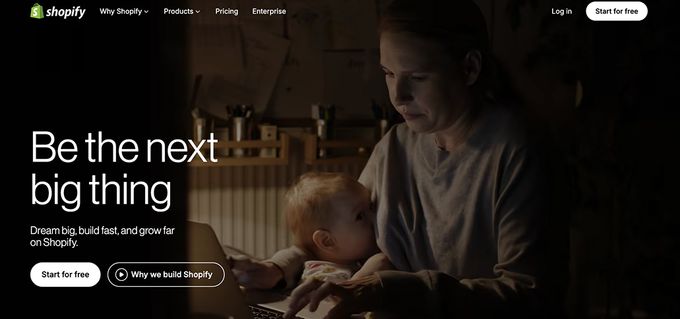
1. Shopify
Shopify runs some of the most consistently optimised landing pages in e-commerce. Their free trial pages strip out navigation entirely, lead with a single headline focused on the outcome (building a business), and reduce the sign-up process to an email field. The minimal friction approach keeps conversion rates high even from cold traffic.
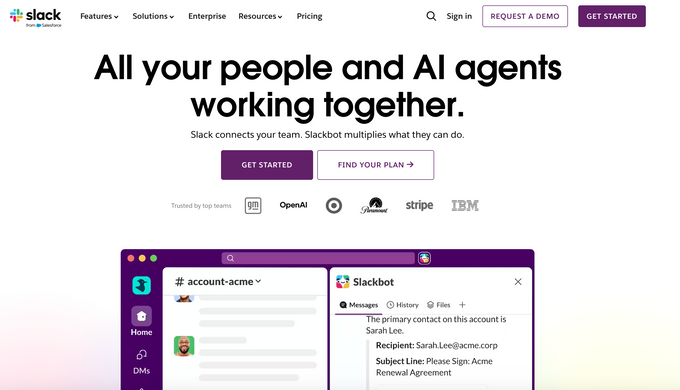
2. Slack
Slack has historically used social proof aggressively on its landing pages, placing enterprise customer logos and team size statistics directly above the primary CTA. The message: if companies this size trust Slack, the risk of trying it is low.
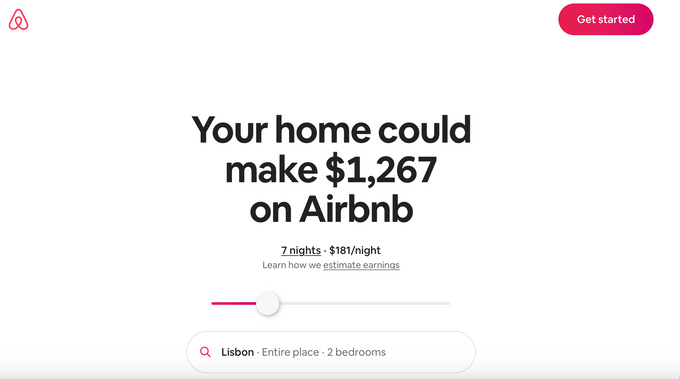
3. Airbnb
Airbnb's host sign-up landing pages personalise headline copy based on location, surfacing estimated earning potential for hosts in the visitor's city. Personalisation at this level creates immediate relevance and dramatically improves the likelihood of conversion.
How to improve your landing page conversion rate
Understanding the elements of a high-converting landing page is a starting point. Improving your actual conversion rate requires a structured testing and optimisation process.
Run A/B tests on high-impact elements
A/B testing compares two versions of a page element to determine which drives more conversions. Start with the elements most likely to move the needle: your headline, your CTA copy, your hero image, and your form length. Small, targeted tests produce clearer data than page-wide redesigns.
» Running tests but not seeing results? See how CROforce's landing page optimisation service works
Use heatmaps and session recordings
Heatmaps show where visitors click, scroll, and lose interest. Session recordings let you watch how real visitors move through your page. Together, they reveal friction points that analytics data alone won't surface.
A visitor who scrolls past your CTA three times before leaving is telling you something about placement or visibility.
Test your value proposition
Sometimes the conversion problem isn't design. It's the offer itself. If your page is well-structured but still converting poorly, test variations of your value proposition. What you're promising, how it's framed, and what's being asked in return all affect whether a visitor decides to act.
Optimise for mobile
A growing share of landing page traffic arrives on mobile devices, and most landing pages aren't properly optimised for that context. Backlinko's 2026 research found that mobile visitors account for nearly 83% of landing page traffic, yet desktop users still convert at higher rates.
This means the gap between traffic volume and conversion performance is a direct optimization opportunity. Short paragraphs, stacked layouts, large tap targets, and streamlined forms are all essential for mobile conversion performance.
Don't let winning tests gather dust
CRO is a continuous process. A test that lifts conversions by 15% this quarter is a result worth implementing immediately and building on, not a reason to stop testing. The highest-performing pages are the ones being actively optimised on a regular cycle.
Conclusion
Building a high-converting landing page comes down to the basics: know what you're measuring, benchmark realistically, and strip everything back to one goal, one headline, and a form that asks only what's necessary.
The businesses that consistently improve their conversion rates aren't the ones that redesign their pages every quarter. They're the ones running structured, ongoing tests and acting on what the data tells them. If that process isn't in place yet, that's the most valuable thing to fix first.
» Ready to run structured A/B tests on your landing pages? Talk to a CROforce expert about building a testing roadmap.
FAQs
What is the difference between a landing page and a website homepage?
A homepage is designed to introduce your brand and direct visitors to multiple areas of your site. A landing page is built around a single conversion goal, with no navigation or competing links, and is typically used in paid campaigns or targeted email flows.
Can a landing page have more than one CTA?
Technically, yes, but in practice, it tends to hurt performance. Multiple CTAs split visitor attention and reduce the clarity of the action you want them to take. High-converting landing pages are built around one primary CTA, with any secondary options given much less visual prominence.
How long should a landing page be?
It depends on the complexity of the offer. Simple actions like newsletter sign-ups or free trial starts can convert well on short pages. Higher-commitment decisions like booking a consultation or purchasing a product typically need more copy to address objections and build trust. The right length is whatever it takes to answer every question a visitor has before they convert, and no more.
What's the most common reason landing pages don't convert?
Poor message match between the source (an ad, email, or search result) and the page itself is one of the most common culprits. When visitors feel they've landed somewhere unexpected, they leave immediately. Slow page load speed, vague CTAs, and forms that ask for too much information are also frequent conversion killers.
How does CROforce help improve landing page conversions?
CROforce is a fully managed CRO service that handles the entire optimisation process, from identifying conversion gaps through analytics and session data, to designing and running A/B tests, to implementing winning variations. Rather than relying on in-house resources or one-off agency projects, CROforce provides ongoing, structured testing that compounds results over time.