
Macro conversion strategy: How to build a frictionless path to purchase
Most businesses know what their macro conversion is. Fewer have a strategy to get users there. Start by mapping your funnel, tracking micro conversions, and removing the friction that stops people at the final step.






Published March 10, 2026

If you've ever dug into your analytics and noticed that traffic is up but sales aren't moving, you've run into the macro conversion problem. Getting people to your site is only half the battle. Getting them to actually do something valuable once they're there is where most businesses struggle.
Understanding macro conversions, and how to optimize for them, is at the core of any serious conversion rate optimization (CRO) strategy. This article breaks down what macro conversions are, how they differ from micro conversions, and what you can do right now to build a cleaner path from first visit to final action.
What is a macro conversion?
A macro conversion is the primary action you want users to take on your website or digital experience: a purchase, a subscription sign-up, or a demo request. It's the action that directly contributes to your business's revenue or growth objectives. This is the "main event" that all your other marketing, content, and UX work is building toward.
Most businesses know what their macro conversion is. Fewer have a clear strategy for getting users there consistently. That strategy starts with understanding how smaller actions (micro conversions) lead to bigger ones, and then systematically removing the friction that stops people from completing the final step.
Macro conversions look different depending on what your business does:
- E-commerce: Completed purchase or subscription sign-up.
- B2B SaaS: Demo request, free trial sign-up, or paid plan upgrade.
- Lead generation: Contact form submission or booked call.
- Publishing/media: Newsletter subscription or premium membership sign-up.
- Real estate: Property viewing request or mortgage enquiry submission.
- Events: Ticket purchase or VIP access registration.
It's worth noting that a business can have more than one macro conversion, especially if they serve different customer segments or sells multiple product lines.
For example, a SaaS company might track both free trial sign-ups and direct plan purchases as separate macro conversions. What matters is that you've clearly defined which actions actually move the needle for your business.
Micro vs. macro conversions: what's the difference?
If a macro conversion is the destination, micro conversions are the steps along the route.
A micro conversion is a smaller action a user takes that indicates engagement and forward movement through your funnel, without yet reaching the main goal. Examples include:
- Clicking on a product page
- Adding an item to a cart
- Viewing a pricing page
- Signing up for a newsletter
- Watching a product demo video
- Creating an account
- Downloading a resource
Micro conversions fall into two categories:
- Process-based micro conversions: Direct steps toward a macro conversion, like adding a payment method, starting a checkout flow, or entering a shipping address. These are the clearest signals of purchase intent.
- Engagement-based micro conversions: Softer indicators, like sharing a post, following on social media, or spending significant time reading a product page. They don't lead directly to a sale, but they show that a user is warming up.
The key difference: Macro conversions tell you whether your business is working. Micro conversions tell you why it is or isn't.
How micro conversions pave the way to macro conversions
The relationship between micro and macro conversions is measurable and actionable. Here's what tracking them together actually gives you:
Funnel visibility
When you track micro conversions in detail, you can pinpoint exactly where users are dropping out. If 60% of users add a product to their cart but only 20% reach checkout, you've identified a specific drop-off point that's hurting your macro conversion rate. Without micro conversion tracking, that gap is invisible.
Intent differentiation
Someone who views your pricing page three times, reads a customer review section, and then abandons is a very different prospect from someone who bounced after two seconds on the homepage. Both show up as non-conversions in your macro data, but they require completely different responses.
Test prioritization
Micro conversion data helps CRO teams identify the highest-friction moments and decide where to run experiments first. If your add-to-cart rate is healthy but your checkout completion rate is low, you know where to focus. That's far more efficient than running broad tests with no directional data.
Erin Choice , CRO Specialist at CROforce
Why macro conversion rates are under pressure in 2026
It's important to set realistic expectations here. Average e-commerce macro conversion rates globally sit at around 2.5-3%, depending on the source and methodology, with top-performing industries achieving conversion rates above 6%. The spread is significant, and it's not just about traffic quality.
Several factors are driving pressure on macro conversion rates right now:
Rising customer expectations
Shoppers in 2026 have experienced Amazon's one-click checkout, Apple Pay's frictionless payments, and Shopify stores that load in under two seconds. Every time they experience a smooth checkout elsewhere, your friction becomes more noticeable by comparison.
Shorter attention spans and more distractions
The average customer journey now touches multiple devices and channels before a purchase. A user who starts browsing on mobile during their commute, continues on desktop at work, and completes a purchase on their phone that evening is normal. Any friction in that multi-touch journey can cost you the conversion.
Cart abandonment remains stubbornly high
According to the Baymard Institute, the average cart abandonment rate sits at 70.22%, a figure that has barely shifted despite widespread investment in checkout optimization. The top reasons are unexpected costs, overly complex checkout processes, and insufficient trust signals.
Knowing these pressure points is the first step. The second is building a strategy that addresses them directly.
How to build a frictionless path to purchase
The best macro conversion strategies aren't complicated; they're disciplined. They focus on making it as easy as possible for an already-interested user to say yes. Here's where to start.
1. Map the full journey from awareness to conversion
Before you can remove friction, you need to know where it lives. Map out every step a user takes from first touch to completed macro conversion. For an e-commerce store, that might look like: organic search, product listing page, product detail page, add to cart, checkout start, payment, confirmation.
For each step, track the conversion rate from one stage to the next. A sharp drop between two stages tells you exactly where to focus your optimization efforts.
2. Remove friction from your checkout
Checkout is where macro conversions are won or lost. The Baymard Institute estimates that optimizing checkout design alone could increase e-commerce conversion rates by 35.26%. Some of the highest-impact changes include:
- Offer guest checkout: Forcing account creation before purchase is one of the most common reasons for abandonment. Let users buy first and create an account after.
- Reduce form fields: The fewer fields you ask for, the more completions you'll get. Only ask for what you genuinely need to complete the transaction.
- Show costs upfront: Unexpected shipping costs are the number one reason shoppers abandon at checkout. Display total costs, including taxes and shipping, as early as possible in the flow.
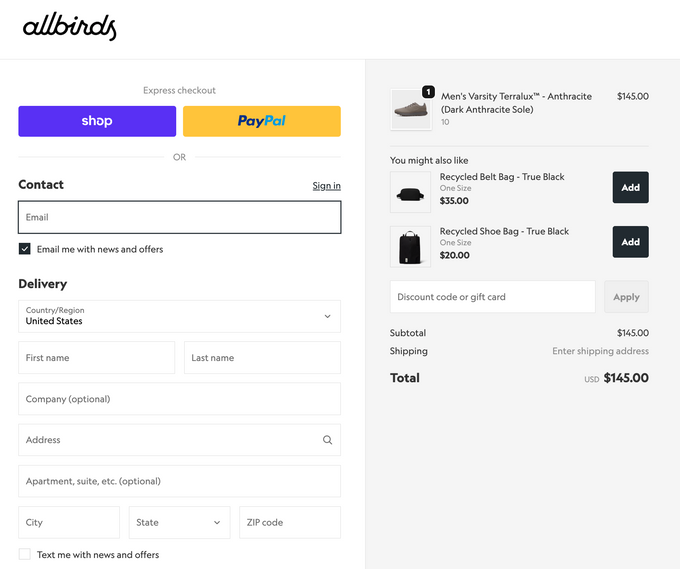
- Support digital wallets: Apple Pay, Google Pay, and PayPal significantly reduce checkout friction, especially on mobile. If your checkout doesn't support them, you're adding unnecessary steps for a large portion of your users.
- Add trust signals at the point of payment: Security badges, money-back guarantees, and clear return policies reduce the anxiety that causes last-minute abandonment.
Brands like ASOS and Allbirds have built high-performing checkout flows around these principles: minimal steps, clear costs, and multiple payment options available prominently.
Erin Choice , CRO Specialist at CROforce
3. Align landing pages with the intent behind each traffic source
A user who clicks a Google ad for "men's running shoes under $100" and lands on your homepage is going to bounce. They came with specific intent. Your landing page needs to meet them there, with the right product, the right price point, and a clear path to purchase without distractions.
The higher the alignment between the ad or content that drove the click and the landing page experience, the higher your macro conversion rate will be. This applies to paid traffic, organic search, and email campaigns alike.
4. Use social proof to reduce hesitation
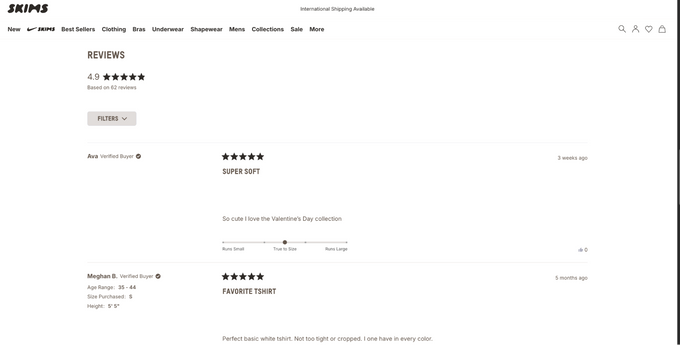
Hesitation is the enemy of macro conversions. Users who are on the fence need a reason to tip over into action. Customer reviews, ratings, trust badges, user-generated content, and purchase counters ("147 people bought this today") all serve to reduce the uncertainty that kills conversions.
Research by PowerReviews shows that users who interact with ratings and reviews convert at 120.3% of the rate of those who don’t. The more review volume you have, the stronger the effect, particularly for higher-ticket items where the stakes of a bad decision feel higher.
Brands like SKIMS showcase effective social proof in action: prominent star ratings (4.9/5 average), review counts, and detailed customer quotes like "Perfect white. Fits true to size. I have it in every color" prominently displayed to build trust and drive macro conversions.
5. Optimize for mobile without compromise
Mobile devices now drive nearly 80% of global e-commerce traffic and over 59% of total online retail sales. While desktop still edges ahead on conversion rate in many sectors, the gap is closing. For businesses where mobile is the primary discovery channel, a poor mobile experience is a direct drain on macro conversions.
The most impactful mobile-specific improvements are fast load times (every second of delay costs you), large and clearly tappable CTAs, streamlined checkout flows, and native payment options. If a user can complete your checkout with their thumbprint and two taps, you've removed almost all the friction.
Tracking macro conversions: What to measure
You can't improve what you don't measure. To effectively optimize for macro conversions, you need to track:
- Macro conversion rate: Total conversions divided by total sessions or unique visitors.
- Conversion rate by traffic source: Which channels are delivering the highest-intent users?
- Conversion rate by device: Where are the biggest desktop/mobile gaps?
- Funnel drop-off rates: At which stage are users exiting most frequently?
- Micro conversion rates at each funnel stage: Add-to-cart rate, checkout start rate, and checkout completion rate.
Tools like Google Analytics 4, Hotjar, and purpose-built CRO platforms let you track all of these in one place and connect behavioral data (session recordings, heatmaps) to quantitative conversion metrics. That combination, knowing both what is happening and why, is what makes CRO actionable rather than just descriptive.
The strategic takeaway
Macro conversions don't happen by accident. They're the result of a deliberate experience, one where every step of the journey is designed to reduce uncertainty, build confidence, and make the final action feel easy.
The businesses with the highest macro conversion rates in 2026 aren't just optimizing their checkout button. They're tracking every micro conversion in the funnel, identifying the exact moments where users hesitate or drop off, and running continuous tests to close those gaps. They treat conversion optimization as an ongoing discipline, not a one-time project.
If you're starting from scratch, begin with what you can measure. Map your funnel, find your biggest drop-off point, and fix that first. Then move to the next one. That's the frictionless path to purchase, built one optimized step at a time.
» Looking to improve your macro conversion rate? Talk to an expert at CROforce to help your team eliminate funnel friction.
FAQs
What is a macro conversion in CRO?
A macro conversion is your main business goal on the site, like a completed purchase, signed contract, or booked demo. It’s the outcome your whole funnel is meant to drive.
How is a micro conversion different from a macro conversion?
Micro conversions are smaller steps, such as viewing pricing, adding to cart, or starting checkout. They don’t bring in revenue on their own but show how people move toward the macro conversion.
Why should I track micro conversions if I care about sales?
If you only track final sales, you can’t see where people drop off. Micro conversion data shows which step loses the most users, so you know exactly where to focus your next optimization.
What metrics should I track to improve macro conversions?
Track overall macro conversion rate, plus conversion by channel and device. Then watch funnel drop‑off, add‑to‑cart rate, checkout start rate, and form completion rate to see which steps need work.
How do I start building a frictionless path to purchase?
First, map your funnel from first visit to macro conversion and find the biggest drop‑off point. Then test changes that reduce friction at that step, measure the impact, and repeat on the next biggest leak.